The disruption isn't coming. It arrived with dates attached. July 1 brought the USMCA review, and Canada got left in the cold. July 20 marks the end of the Section 301 investigations. July 24 is when the Section 122 tariffs, currently capped at 10% and set to expire, have no automatic renewal. Q2 wasn't a quarter to review. It was a quarter to survive.
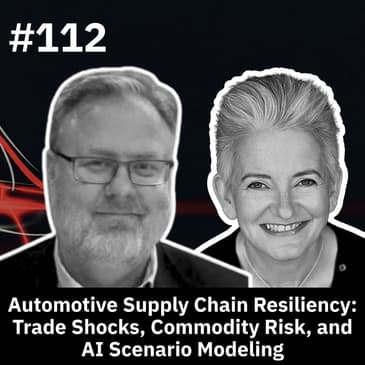
In this host-only Q2 review, Jan Griffiths and Tom Roberts trade the guest chair for a hard look at a quarter that refused to sit still. Trade policy moved. Commodity prices moved. The talent question moved. And underneath all of it sits the problem QAD has named for years: manufacturers don't have a data problem, they have an execution problem.
The trade math keeps splitting into smaller pieces. Companies may soon have to separate US and Canadian content, then carry that split through every tier of the chain, where country-of-origin data was already hard to trust. Commodities pull the same thread. With the Strait of Hormuz closed at the time of recording, oil spiked, and aluminum, resin, and plastics moved with it. Tom describes tier ones already using AI to catch index swings against exploded BOMs and recover costs that were once hidden in one analyst's spreadsheet. The data was always there. The speed wasn't.
Then there's resiliency, the word every leader defines differently. Jan and Tom settle on a working one: know where your risk sits, and be ready when something breaks. The Novelis fire, a single Nylon 12 plant, an earthquake that takes out paint for the F-150, none of these are hypothetical, and AI now lets a team model that exposure across a region before it lands. The quarter closed on the people who inherit it all. Universities call AI cheating. The employers hiring those same graduates expect it on day one. That gap is real, and it starts to close on a plant floor, not behind a screen.
Q2 proved the old playbook can't keep pace. The leaders who win the back half won't wait for stability that isn't coming. They'll have built the data, the scenarios, and the bench before the next headline makes the decision for them.
Themes Discussed in This Episode
- USMCA and the cost of a 10-year breakup
- Section 301 and Section 122: the tariff deadlines that matter
- Splitting US and Canadian content across every tier
- Why do what-if scenarios decide who holds the margin
- Commodity volatility and index-based cost recovery
- Using AI to model geopolitical risk in real time
- Resiliency: knowing where the risk actually sits
- Preparing the next generation for an AI-first plant floor
This podcast is powered by QAD RedZone.
About Your Hosts
Jan Griffiths
Jan is the host and producer of the Auto Supply Chain Champions Podcast and The Automotive Leaders Podcast. A former automotive manufacturing and supply chain executive, Jan is recognized as a Champion for Culture Change in the automotive industry. She brings direct, grounded conversations to leaders navigating execution, disruption, and transformation across the global automotive ecosystem.
Tom Roberts (Co-host)
Tom is Co-host of the Auto Supply Chain Champions Podcast and Vice President of Strategic Industry Development at QAD. He works closely with automotive and industrial manufacturers to close the gap between insight and execution, helping leaders move from visibility to systems of action that drive real operational outcomes.
Mentioned in the Episode:
Episode Highlights
[02:15] The USMCA Cold Shoulder: The July 1 review signaled the US has little interest in keeping Canada and Mexico together, and this breakup will be bumpy.
[03:33] The Dates That Decide Q3: July 20 and July 24 bring Section 301 and Section 122 to a head, with 12.5% duties on 46 countries in play.
[05:23] Splitting Content Across the Tiers: Separating US and Canadian content means multiplying already-hard country-of-origin data through every supplier tier.
[06:52] What ETL Actually Means: Tom breaks down extract, transform, load in plain terms, and why clean data decides your tariff exposure.
[11:00] The Spreadsheet Nobody Can Read: AI can flag index movements for cost recovery instead of trusting the one analyst who understands the file.
[12:10] Resiliency Starts With Risk: Know where your exposure sits and have a plan ready before the next plant fire, earthquake, or closed strait.
[14:51] From Failed Pilots to Real Wins: AI pilots succeed when they start with a known problem and a defined outcome, not "let's apply AI and see."
[17:45] Build the Bench on the Plant Floor: Students need real plants and real AI tools, closing the gap between how they learn and how they'll be expected to work.
Top Quotes
[06:33] Tom Roberts: " Clean data is going to be incredibly important with those product codes, product classifications to understand what is actually exposed to tariffs, what's not, and I think AI is gonna play a big part in helping to automate some of the cleanup and transformation. "
[12:10] Jan Griffiths: "Resiliency is really, step one is understanding where your risk is and being ready when something breaks."
If this episode resonated, share it with a fellow automotive leader and subscribe to the Auto Supply Chain Champions Podcast, where we're closing the gap between insight and action across the global automotive supply chain.
Follow the Auto Supply Chain Champions Podcast for real conversations with leaders who are making hard choices, focusing their bets, and leading with intent.
🎧 Follow the podcast:
🔗 Learn more about QAD Redzone: https://www.qad.com/
[Transcript]
[00:00:00] Jan Griffiths: This is the Auto Supply Chain Champions Podcast. We are on a mission to bring you real conversations with the leaders who are transforming supply chains in the automotive sector. These leaders are true champions of manufacturing, and we're here to share their stories. I'm Jan Griffiths, your host and producer, and I'm joined by my co-host, Tom Roberts, Vice President of Strategic Industry Development at QAD.
[00:00:30] Tom Roberts: Great to be here, Jan. What I see every day is simple: manufacturers don't have a data problem, they've got an execution problem. This show is about how artificial intelligence, systems of action, and empowered teams can help close that gap.
[00:00:45] Jan Griffiths: Let's get into it. This podcast is powered by QAD RedZone.
Hello and welcome to another episode of the Auto Supply Chain Champions podcast, and this is our special Q2 review episode. This is a host-only episode, so I will be speaking to my wonderful co-host, Tom Roberts.
Tom, how are you?
[00:01:10] Tom Roberts: I am doing well, Jan. Trying to stay cool in 89 degree Southeast Michigan, so.
[00:01:17] Jan Griffiths: Yes, I know. It's hot. It's hot out there. It is hot everywhere, not just the temperature. It is hot all over the planet, and let's talk about one area that is on fire right now, and that is trade. Woo! I mean, this is our Q2 review, and just in the last few weeks, just in the last few days, so much has happened.
[00:01:41] Tom Roberts: Absolutely. I mean, what's gonna happen with USMCA? What is the percentage of content that needs to be created in the United States? Every day, automotive companies especially are facing these kinds of questions
[00:01:53] Jan Griffiths: Yeah. And as we've said many times on this show, and we talk about this in depth with our guests that this type of volatility, it's all around us. It's going to continue. The environment is going to continue to be this way, and we have to be ready. We have to have our businesses ready, our people ready, our processes ready, and yes, our data has to be ready.
But let's jump into USMCA, 'cause just recently, July 1st, was a review point for the USMCA, and the US made it pretty clear that they were not really interested in continuing a relationship with both Canada and Mexico together in this agreement. And, the sense that we got was that Canada is a little bit out in the cold here.
There are dates in the schedule for a review, a continued review with Mexico. But it's gonna be a bumpy ride. And as we said in our last episode about this subject, this is a 10-year breakup, which is awfully painful
[00:02:58] Tom Roberts: Yeah, absolutely. I mean, Jan, if we take a step back for a minute, you know, you've visited some of those plants in Mexico. I've visited some of those plants in Mexico. There is a huge footprint. I mean, there's obviously, I'm understating, it's just a massive footprint. And now, we have to say, how does USMCA affect that. The changes that are coming? It's just gonna be, again, volatility, major impacts for a long time to come.
[00:03:25] Jan Griffiths: And there's a few key points that we need to be aware of, and I'm sure we'll talk about this in future episodes, but we're recording this in July.
Now, we've just come through the July 1 review, but there's a few dates that we've got in front of us. July 20th is the USMCA round three, and then the deadline for the Section 301 investigations concludes on July 20th.
So if you remember when the IEEPA tariffs were determined illegal, then the administration went to Section 122. But Section 122 is capped at 15%. It's currently at 10%, but it's capped at 15%. That will not automatically renew. Its expiration date is July 24th, and that cannot be reviewed. It just cannot.
I think it has to be reviewed by Congress. So, Section 301 investigation started indeed before the IEEPA ruling, but really picked up steam after the IEEPA ruling. And so now we could be faced with more Section 301 tariffs, and the date for all of those investigations to be closed is July 20th for the 301, and July 24th is when Section 122 tariffs conclude.
And if 301, those investigations, turn out in the way that the administration wants them to turn out, we're looking at possibly 12 and a half percent duties on 46 different countries.
[00:05:03] Tom Roberts: The Punitive ones that you can put in place, that's not gonna be an easy battle and it will not stop, at least in the current administration there. There will be a constant press there, I think.
[00:05:11] Jan Griffiths: Yes.
[00:05:12] Tom Roberts: It has to be dealt with, it has to be addressed inside the automotive companies.
You know, the time for lobbying is there and writing letters to legislators is there. But, in the end you have to comply.
[00:05:23] Jan Griffiths: So this ability that all companies need to really project what if scenarios, because we could have projected that the idea of splitting and identifying both US and Canadian content would be something that would be on the table. But you have to be ready for that. How are you gonna do that? We all know how hard it is to get country of origin data, but now you're gonna have to split it again, and then let's not forget, you're gonna have to multiply that all the way out through the tiers.
So getting your arms around the process and the data to be able to do this quickly and run those what if scenarios, I think that's gonna make the difference between successful companies in the future, Tom.
[00:06:12] Tom Roberts: Absolutely. I think, and I probably am getting ahead of myself here, but I think that the key to this going to be... obviously, the key is data, but you're gonna have to have ETL tools look at data, extract it, maybe update it with the information that's required, and then reinserts it back in your environments. That clean data is gonna be incredibly important with those product code, product classifications to understand what is actually exposed to tariffs, what's not, what's the percentage of bill, you know, data. And I think AI is gonna play a big part in helping to automate some of the cleanup and, transformation.
[00:06:52] Jan Griffiths: Tom, you mentioned ETL. Now, don't get too techy on me here. What's ETL? What's that mean?
[00:06:56] Tom Roberts: Yeah, it's extract, transform, and load. So basically, in the days of conversion, you know, they call it data conversion, but basically it's extracting data and then it's doing something to the data, maybe appending information onto it or changing information in there, and then loading it back in the system.
So if the current data state of your system is such where it doesn't have the information you need, for example, in tariff management, then you have to do something to that data ostensibly. So you have to extract it, you have to transform it in some way, product classifications, you know, other things in there, countries of origin, and then insert it back in the system to be able to help tell you, are you exposed to a tariff suboptimal country or, what are your rates and all those sorts of things.
So very important to helping to address this issue.
[00:07:45] Jan Griffiths: Well, thank you for that explanation. Now, a question for you about AI, and this relates back to the trade environment that we're in right now with, as of today, of date of recording , the Strait of Hormuz is closed, so oil prices are skyrocketing. Now, that'll change probably three times by the time we release, but it's suffice it to say that commodity prices are extremely volatile because of the price of oil, and that's gonna the Strait of Hormuz will impact more than just oil. It's gonna impact aluminum. It's gonna impact resin. It's gonna impact plastics.
[00:08:18] Tom Roberts: Oh, everything. Foam chemicals, you know, the whole thing.
[00:08:20] Jan Griffiths: Yeah
[00:08:21] Tom Roberts: I think I read, and I'll have to fact check myself, Jan, but I think I read that nine VLCCs have been hit, you know, crude carriers.
[00:08:28] Jan Griffiths: Yes
[00:08:29] Tom Roberts: Very large crude carriers have been hit. And, just the potential, environmental concerns alone are one to really cause concern.
But that's a lot of crude again, you're potentially putting at jeopardy in the market. It's causing those prices to be very volatile
[00:08:48] Jan Griffiths: And with that happening, as a former supply chain leader, I remember those days when you would have to figure out if oil moves a certain amount, what does that mean to the business?
Well, that means you're gonna have to figure out what that fluctuation, whether it's up or down, what that means throughout your entire supply chain, and that is both on a product basis, on the component basis, so you have to know exactly how much of the affected product you have in your components, what that adjustment looks like, what adjustment mechanisms and agreements you have in place, whether it's with your supplier or whether it's with your customer.
Maybe both, maybe not. Then there's transportation. How if diesel prices go up, how is that gonna impact your logistics cost? A CEO will ask these questions and expect an answer very quickly. We both know that getting that answer is really, really difficult unless you've got your arms around the data. So what are, what are you seeing, Tom?
Where are people using AI to help with that type of situation?
[00:09:57] Tom Roberts: So I personally have had a number of discussions with very large tier ones, where they're obviously they have these recovery contracts potentially, where you're looking at potentially resin or, you know, some kind of rare mineral or steel or whatever it might.
[00:10:14] Jan Griffiths: Yeah
[00:10:15] Tom Roberts: And if the index rises during a specific period of time and the cost of that to create that finished good rises, a supplier can go ask the OEM for some recovery. we've been talking a lot about how we can enable AI to help look at and flag if there's enough of a movement in the index to say, "Hey, these, this X number of invoices with this, these finished goods and this exploded BOM that had this consumption of material in the BOM," and then evaluates that through the index delta. You can use AI to help flag, not only flag that, but help pull the data into a system-based display rather than the giant spreadsheet, which I think most companies are using. You know, they run this report, and they pull it in. They run this report, and they do VLOOKUPs and then cross-references, and you've got the guy, the one person who knows the spreadsheet for this commodity, and if that person, if they win the lottery, and they leave their spreadsheet behind, does anybody know how to get in there and decipher that?
[00:11:19] Jan Griffiths: Yeah
[00:11:19] Tom Roberts: What are the inputs and outputs? What were the formulas used? And it takes a while, it can take a while to really sleuth that. Now you have AI that can do this, pretty quickly and help flag those variances for recovery.
It's a massive discussion right now, certainly in AI and in tier ones and twos.
[00:11:37] Jan Griffiths: Because it has to be-- you have to run the what if scenario, but it also has to be predictive. So if certain things are happening around the world, then it needs to predict that, that occurrence or the likelihood of that occurrence, and then there's a percentage of probability, I'm assuming, that's attached to that.
But the bottom line is this, and I can't deal with all the probability percentages and numbers. That's not my thing. My thing is this: business has gotta be ready for it, and you gotta know your supply chain, you gotta know the parts, you gotta know the suppliers, and you've gotta know where the risk is.
And this comes back around to this discussion of resiliency. And every time I talk to somebody, they have a different definition of what resiliency means. And we'll bring a guest on in the show in the next upcoming several episodes to really get deep into resiliency. But resiliency is really, step one is understanding where your risk is and being ready when something breaks.
'Cause not every supplier is gonna have the same level of risk to, to the company, but some are gonna have a massive impact, and we need to know who those suppliers are, what the backup plans are, so if something goes wrong, like the Novelis fire, right? For example, what are you gonna do?
[00:12:55] Tom Roberts: Yeah
[00:12:55] Jan Griffiths: What are you gonna do?
[00:12:57] Tom Roberts: It's one of those things, Jan, where having spent a long time in automotive like you have, it's the most difficult thing to do. I assume early in my career that somebody was figuring this stuff out at a large company, right? There's people who are gaming out these scenarios and people who are really figuring out what's gonna happen. But I look at automotive and, you know, with the margins the way they are, you were inside of that company leadership and you said, "Hey, there's this group of twenty people, and their only job is to game out scenarios where something might happen," it's probably gonna be the first thing to get cut, right?
'Cause you're not directly contributing to the bottom line. But I think now, again, with resiliency coming up as a real asset in organization, you've either gotta take existing people and have them take on some of those scenarios, so they're actually, continuing to drive the normal automotive world. I should knew the normal concept of the automotive world moving forward. But you've gotta have them, spending some time actually thinking about and gaming out those scenarios. And again, it goes back to the old saying, I think it was Eisenhower who said, "I find planning is indispensable, but plans are useless."
[00:14:02] Jan Griffiths: Yeah
[00:14:04] Tom Roberts: It's the idea of going through the maybe it's cogitating. You know, it's, it's going through the different thought processes to say, "What happens if a supplier plant blows up in Europe and they make Nylon 12, and they're the only company who makes Nylon 12?" Right?
[00:14:19] Jan Griffiths: Yes
[00:14:20] Tom Roberts: Or if you have the plant in Japan makes the metallic flex for black tuxedo paint for the F-150, and that gets affected, that gets affected by an earthquake, and it takes out thirty percent of the potential production for a given vehicle. Those have happened, right?
These black swan scenarios, floods in Thailand, COVID, these things are happening, so I think having somebody game those out is... and using AI to model that is a massive asset to an organization
[00:14:49] Jan Griffiths: Yeah
[00:14:49] Tom Roberts: I'm thinking about that.
[00:14:50] Jan Griffiths: I agree.
Are you seeing these AI pilots moving more into reality now, Tom? Because I know last time we talked, pilots were failing, right? Pilots were failing, people were frustrating, but are we making progress?
[00:15:04] Tom Roberts: I think what happens is, if you come into an AI approach with, "Hey, let's just apply AI and see what we can do," that's where people can run into problems. And I know it sounds like I'm oversimplifying, but there's a lot of AI approach out there where, "Hey, let's look at your process and try and improve it." Whereas taking known problems and saying, "Hey, this is what we are going to do with AI," and here's what we expect at the end. Those things I think are much more successful. One of the ones that we have available is exactly what you're talking about. You can look at a, a red region, right?
Geopolitical risk in a region like the Strait of Hormuz, and you can map out your entire supply chain within that region. You can see where your supplier sending locations are, how much, risk in your POs and valuation there is in that area, and the potential delay prediction. those things are out there today, and it's actually pretty easy to draw the breadcrumbs in your mind why it works, right?
It's logical to think, okay, I can find out all my supplier locations. That makes sense. I could do that manually if I had to. You can figure out what POs are currently being worked in those scenarios, and then there's a valuation of that.
So you can draw the breadcrumbs in your mind and think those are the things where AI can really, really help, is where you can... If you just said, "Hey, I, I know the breadcrumbs, I just need it to do it quickly, and I need it to tell me, you know, give me some idea on the actual how much and how many and how big is the breadbasket kind of thing.
Like, how much delay is this gonna be, and how much evaluation? Is this something I need to worry about or what.
[00:16:43] Jan Griffiths: Yep. Yep
[00:16:45] Tom Roberts: That's where I think AI is being very effective right now.
[00:16:47] Jan Griffiths: Yeah, that's good to know. Well, we talked about trade, we've talked about AI, we've talked about data. Let's talk about people. So we've had some really interesting guests. I know that you and I are both extremely passionate about the young people starting to come into the world of supply chain, and we've had some interesting guests on that very subject
[00:17:09] Tom Roberts: Absolutely. And you have a daughter as well who just, I think graduated. I have two college students. I have one who's graduated from college, and I have one in high school. So this is a very pertinent thing for me to understand, what is their future gonna look like and what is the opportunity.
I even have one, my oldest who's graduated, works in supply chain. I think that there are such amazing tools that are gonna be available to them. The concern I have is I think some of the universities are very concerned about the use of AI because of, quote-unquote, cheating, not learning the basics.
But then, those same students will get out as a job in an internship, and the company they're working for expects them to use AI first thing when they get there, right? No, no, use AI to do this, this, and this because it'll make you faster. I almost think there needs to be a bridge between learning how to think and learning all those things, but also learning the tool sets in college very specifically. It was great to have Leah here, from Central Michigan. She's had a obviously, a long time, exposure to supply chain in the automotive world. But I think that she even said, "Hey, let's expose these kids more to plants. Get them in a manufacturing plant. Let them see what's being done."
Because I'll tell you, in my career, that's what always makes it real. You see a press, or you see an injection molding machine, or you see a forklift, moving parts, or you see an AGV or something, you know, pulling, things through a plant or automation or robotics. That's what makes it real, is seeing those things in action, not always, sitting behind the computer and, creating PowerPoints and spreadsheets. It's good to get in the plant. I think that's what the exposure needs to include
[00:18:57] Jan Griffiths: I think you're right. And we haven't had any students on, have we, talking? Or maybe we did a couple of years ago, but not recently. Certainly not since the advent of AI. So I think let's do that, Tom.
Let's bring some supply chain students on, and let's get their perspective. I think that would be an interesting episode.
And as always, to our beloved audience, if there is a specific topic, subject that you want us to dive into or a guest that you believe we absolutely should have on the show, please let us know. You can reach us through our LinkedIn profiles or through our emails. It'll be in the show notes. And, this concludes our Q2 review, Tom.
On we go, onto the next one.
[00:19:36] Tom Roberts: All right. Enjoy the summer, Jan. We'll talk to you next podcast.
[00:19:39] Jan Griffiths: Okay, bye.
We wanna hear from you, our listener. Tell us what are your challenges right now? What conversations do you want to hear across the airwaves on this podcast? Drop us a comment on our podcast website. The link is in the show notes.