[Transcript]
[00:00:00] Jan Griffiths: This is the Auto Supply Chain Prophets podcast, and we are on a mission to bring you the latest insights and thought leaders leading the charge on supply chain transformation in our beloved automotive industry. This podcast is powered by QAD and AIAG. I'm Jan Griffiths, your host and producer. Let's meet your co-hosts.
[00:00:27] Jim Liegghio: I'm Jim Liegghio from AIAG.
[00:00:29] Terry Onica: I'm Terry Onica from QAD. Let's dive in.
[00:00:36] Jan Griffiths: Hello, and welcome to another episode of the Auto Supply Chain Prophets Podcast. Let's check into my co-host, Terry Onica. Terry, what have you been up to?
[00:00:44] Terry Onica: Well, yesterday we did a live podcast at the QAD Midwest User Group, and what I really thought was great yesterday is getting feedback on our podcast from one of our guests that we interviewed, French Williams from Royal Technologies, and he just shared with us the value that he gets from the podcast and just how we share about the importance of careers in supply chain. And we're really a voice, he feels, for attracting people into the field of the supply chain. So it's just nice to hear that I'm the type of person, what drives me is to know that I'm making a difference. I'm helping this world in some way, shape, or form. And so, it's always just rewarding to hear that we're helping.
[00:01:22] Jan Griffiths: Yeah, it was a great event. Jim, what have you been up to?
[00:01:25] Jim Liegghio: Like Terry said, it's nice to hear when you're making an impact and people are listening to you and hearing what you have to say. And really, it's our thought leaders that we're showcasing on the show.
So yeah, sometimes you don't think about it. You don't think about the impact the show has on listeners and their lives and their careers. So yeah, a little bit of feedback was nice to hear. Events? Obviously, right now it's event season, right? There's a ton going on. AIAG had the Quality Summit last week. We had 470 plus attendees and exhibitors, so a big year for us. Tomorrow and the next day is the IMDS conference out in Novi. So yeah, it's definitely thick in the event season. Yesterday, the Midwest User Conference for QAD, that was fun, like Terry said. So yeah, just a ton going on. Life's moving really fast these days, Jan. I wish it would slow down, but it's been a lot of fun.
[00:02:05] Terry Onica: What was really fun at the conference is when we did the session with Fred Coe and he talked about EDI and Catena-X, and it was great to have Jim in the audience because these impact him so much. And actually, somebody that attended that session, got hold of me today and says, "I wanna participate in the EDI advisory report."
[00:02:22] Jim Liegghio: Oh, perfect. Yeah.
[00:02:23] Terry Onica: Remember I was telling them, if you wanna fix issues in the industry, AIAG's the place to go and that's where your voice needs to be heard. And I was so excited to get an email first thing this morning.
[00:02:32] Jim Liegghio: Yeah. You know, that's great, Terry. It was very serendipitous to be in that room with you guys yesterday. I didn't know I'd be part of the presentation, which was fun. But a lot of people are curious about Catena-X, more to come on that. Plug for AIAG.org, if you're curious about Catena-X or have questions or wanna see some of the use case data. I'm gonna put a little plug in there for AIAG.org, plenty of information there.
[00:02:49] Jan Griffiths: Well, I have to tell you what I loved about the live conference, the live QAD Midwest Users Conference is the tremendous focus on manufacturing. We are talking about manufacturing coming back to the US, we're talking to suppliers, to companies, tier ones, tier twos, about what they're doing, and how they're bringing manufacturing back to the US. Lot of activity.
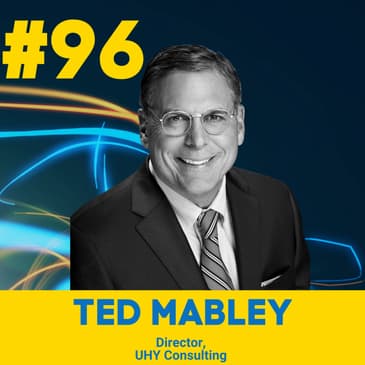
There's one process that we haven't talked about at all on this podcast and it needs some attention. And I was fortunate enough to be at the CAR MBS conference several weeks ago, and I happened to pick up a white paper and it is written by CAR - Center for Automotive Research - and UHY, and it's titled, Automotive Suppliers in the Revenue Acquisition Process Then and Now.
Now, revenue acquisition process. I'm sure there's a story as to why you call it that, but nobody I've ever come across has ever called it that. It's the RFQ process. Let's just call it what it is, shall we? That's why I am thrilled today, we have on the show Ted Mabley, a Director at UHY and co-author of this white paper. And before we have Ted talk about the white paper, I gotta tell you and all our listeners out there, of all the white papers I've ever read, this one hit home with me. It's factual, it's real. It's not written by AI, it's not full of fluff. It's data, it's insights, and it's really bloody good. And that's all I gotta say. So, Ted, how's that for an intro?
[00:04:29] Ted Mabley: Oh my gosh. Thank you. That's so kind. I really appreciate it.
[00:04:32] Jan Griffiths: It's true. So Ted, then and now, your paper compares a 2002 baseline with today. You know, what's really changed? There's a lot more RFQ activity happening right now. Give us the highlights.
[00:04:47] Ted Mabley: Sure. Great. Well, thank you everybody. It's so nice to be here. And again, thank you really for diving into this topic. So, a little bit of background, I was part of that original team back in 2002 that actually started this process. It's a critical business process that every single supplier and OEM have, right?
It's different and similar in every single situation. So what we looked at were all the key variables in terms of how many people, all the key metrics, about how many a year do you get, how long does it take the process, who's involved, who has to do the review process.
So again, all of those workflows that go into this entire microcosm of a business flow. It's always very time consuming. It's driven by a few key people who've been doing it for a very long time. They have what we call sticky knowledge. So over 10, 15 years, they just know. They know who to call out the plan, they know who to call on purchasing. They can pull all this together very quickly, and with a high level of fidelity.
So what's happened in all those years? It's gotten more complex. Those people that know how to do it are leaving and not being replaced. There's not much automation at all in the process. It's very, very manually driven, and suppliers are struggling, right? Because they're getting a deluge of new quotes coming in. Not only, as you talked about for relocation to North America, a huge amount of market tests going on.
Again, those could be similar. They could be linked. We didn't know it wasn't really part of the study. There was a lot of the feedback that we got on the one-on-one meetings.
[00:06:21] Terry Onica: So, Ted, I couldn't agree with Jan more. The RFQ process in automotive is so cumbersome and it's difficult and you're gathering a lot of data, really starts to set the tone for the whole process after. So it's very critical, the collaboration and the effort that goes into it. So, what's really stopping the process today from being more efficient?
[00:06:44] Ted Mabley: There's a couple things. One is there's been a lack of technology investment. It's again, SharePoint, Excel files, emails, right? It's all over the place, so there's no real standard set up there. Now, some companies have built their own systems and they're very robust and reliable. They're very good. Others, no, it's still extremely ad hoc and it's phone calls. Were late, can you get me the information? There's no audit. Tracking capability. So, again, very loose process that's broken in multiple different areas.
[00:07:18] Jan Griffiths: Yeah. And yet, it's so critical. Let's say it's a OEM and a tier one, Terry, you mentioned the starting point. It is the starting point that launches all of the activity within the supply base, so you've gotta get it right.
And if you force suppliers to doing it too fast, not only is there a chance that they will make a mistake, and that era can go both directions, it's the time that's involved and you have a natural tendency to pad it. Okay? I mean, you just do. If somebody's gonna push you for a quote, what are you gonna do? You're gonna pad it.
And that's no good for anybody either, or you underestimate it, and that's no good for anybody either. So, it's such a critical process and a critical document. I am shocked, Ted, that we're sitting here today talking about this and some of the numbers that you've discovered in your study: on average 800 RFQs a year, and that's up from 495 in 2002.
[00:08:22] Ted Mabley: That's correct. So, if you look at just the velocity going through that pipeline, how do you manage? The pipeline to that funnel is still this big. It's not this big. So you get all of that back pressure going through, and that was one of the most common reasons we heard for not proper submittal. They were late internally, they were late externally. So you had both of those things going on. We also learned that there are issues around communication errors, data composition errors, things were filled out. We had samples where people had submitted in their RFQs with zero profit and zero SGA. How does that happen?
[00:08:57] Jan Griffiths: Wow, my jaw dropped when you just said that.
[00:09:00] James Liegghio: There was definitely a pause on the other side of the mic there, Jan.
[00:09:03] Ted Mabley: Yeah. That's a big oops, right?
[00:09:04] Jim Liegghio: Yeah.
[00:09:05] Ted Mabley: How does that go through a quality control process?
[00:09:07] Jim Liegghio: Ted, you mentioned sticky knowledge early on in the conversation. Obviously, generational turnover. We deal with that in a lot of different areas of supply chain, the loss of generations exiting the industry and some new folks coming in, and that tribal knowledge, we'll call it that as well. What are some best practices to manage that right now? That's a huge problem in all areas of the business, but what in the procurement sector, in the RFQ sector, what are some of the best practices that are out there to contain that issue?
[00:09:31] Ted Mabley: If you remember Bob Lutz, right? The absolute leader of so many different things and an absolute legend in the auto industry. So, Bob had this, it wasn't a theory, right? It was a Bob Lutz fact, right? Which was, it takes seven years to become proficient inside the automotive industry. So, either I'm doing a brand new vehicle or I'm doing a refresh, whatever one of those two combos, it's seven years.
So if you just look at the duration that it takes for someone to be competent, it's a while. If there's no mentoring programs, some companies, the best in class companies do have a farm club, right? So they'll bring people in, they'll get 'em trained up, coached up. Then they put them back out in their functional area.
So you bring an engineer in who knows how to get experience of building a BOM very quickly. So they know how to do the process from a functional point. Then when they get back out into their DRE function, they get it. They know what they have to do, and the same thing from a procurement point of view. They can quickly come in, and many times there's not enough time to get an accurate quote, so you have to do some fudging. What did we do last program? What about the program before? What about a program for another OEM? So, if you start to build what we call these Franken BOMs, it gives people a sense of understanding, right? To say, okay, we pick here, we pick here, we pick here. So I get it, I can start to put this process together bit by bit, piece by piece.
[00:10:53] Terry Onica: You know what? QAD, we provide a supplier relationship management tool, and I could tell you when organizations — especially, we work a lot with the tier one — start to implement these tools. To your point, it starts to get more better and more efficient because they have that data readily available. They can easily, at the start of a quote, compare one supplier to the other because the data's there.
When we look at tariffs moving suppliers around, where are all my locations? We really start to see that drive efficiencies and to be able to make those decisions faster. So have you seen anything out there, when you look at those suppliers that do use automation, do you have any insights on that?
[00:11:32] Ted Mabley: We only looked at a couple key areas, and again, we had to use that from a linkage point back from 2002 to 2025. Going forward, we've got some ideas about how to do some subtle changes to ensure the data is consistent, but I think tweak a few things for where we are now from an industry point.
So the question that we did drill down on, which it was really about what are people using or think about using with AI? And quite frankly, it was not much faith. Most of the respondents said, "We don't have anything in process, and we're also looking at something." I think the actual term was about 38% of the companies were looking at doing something and the rest were like, we're gonna wait and see.
But if you take a look at this process, it really screams for some type of automation, 'cause the data's all in-house. I'm not going to anyplace else. I own the BOM. I know what my cost structure is. I know how much it takes to make something right from a time point. I know my burden rates, both fixed and variable. So all that stuff is there, right? It's just a matter of, in the Japanese manufacturing methodology, put the tools in front of the people so they can do their job, right? Really simple. Get it there.
[00:12:43] Jan Griffiths: Yeah, and I think the data. With an AI tool, the data's gotta come from a number of different places because there's the past RFQ, the past quote on something similar. But that doesn't mean that quote was right. Your actual experience in production might be vastly different. That manufacturing process might be costing you three times more than what you quoted it last time. So you need to get actual data as well as quote data. And I would think somebody would be able to design something that could reach into your systems and pull all of this data out, wouldn't you think?
[00:13:21] Ted Mabley: Absolutely. So if you, pardon the pun about Rod Stewart, right? Every picture tells a story, every quote tells a story. And it's a picture in time, 'cause I am putting together a bomb and an estimate at an engineering level at a certain point in time. Now, when I submit it, and two, when the PO is being issued, there can be a very long gap. It could be weeks, it could be months, right?
So that BOM has moved several different iterations. So by the time I'm awarded a PO, it's nowhere near where I quoted. So I've gotta do a true up catch up, and then I gotta move on in terms of change, development, whatever testing. But then there's nothing here in terms of reconciliation.
So again, you're starting from such a data gap. And again, you're right, you can go find some stuff and put together an audit trail, and some of your better suppliers actually do that. But it's tough, right? It's really tough, 'cause who wants to go backwards? 'Cause I got all this pressure to get this program launched and oh by the way, here's another 799 quotes behind me, right?
[00:14:22] Terry Onica: So the RFQ process, organizations in the business, it shouldn't just be a purchasing function, right? We should have quality and engineering and lots of different organizations within the business should be involved. How much is siloed culture do you think, impacting this?
[00:14:39] Ted Mabley: So if you look at the critical path, right? So you've got sales and marketing, right? They have a role in it's finance, obviously from an final audit to make sure that the quote hits all the financial targets before it goes in. But purchasing, you got plant operations, you've got manufacturing engineering, you have cost engineering, and also you've got some sort of a product development or manufacturing — product manufacturing engineering.
That's a lot of folks, right? Everyone has to have a visibility into this process. And again, we found some companies are doing a very good job of getting that window open for everyone to be able to see. Others, you're absolutely right, it comes from this system which I don't have access to, 'cause I'm in purchasing and I can't get into this engineering system, or God forbid I have to get into the logistics system so I can put together a total landed cost, roles, responsibility, permissions. All of that really kind of falls apart, and just complicates the process.
[00:15:36] Terry Onica: If you had to say, here's three things that you should do for those that need to fix the process in their organizations that are failing, what would be just three things you would recommend that they should do next?
[00:15:49] Ted Mabley: Well, I think there's a litany of things from a triage point, like what do you do? Right? How do you fix the patient? But really, the first thing is addressing the people issue, 'cause if you don't address that, rest of it just falls apart. So it's about coaching people up, getting a true replacement plan. So if I'm leaving in two years, what's my plan to be able to train one or two people behind me to be able to do this? And I think we all know how bad the tool and die industry is right now, right?
And again, a lot of people that are excellent in this process, or guess what? Tool makers, 'cause they know how much a tool costs, they know cycle times and they know how much a part in theory could cost. So those folks are not being replaced in the industry. So if we address the people problem first, then we can tackle some of the IT issues that are behind it.
And again, there's a whole bunch of new technology coming into play that is, you don't have to spend a lot of money. It's not like an ERP system, but takes years to install. These new type of programs are very user-friendly. All the heavy lifting is pretty much done. So again, you're telling it where to go, not how to get there, and the interface is in there. Just to your point earlier about all the new APIs that are being developed. So if I can get that data moving faster and it's good data, then the people that are there, they can start to use it much more efficiently. Now, the third thing, if we're talking about ifs and wishes and everything else, the third thing would be the OEMs really starting to work together to help with the fix this process.
[00:17:19] Jan Griffiths: Alright. OEMs working together?
[00:17:21] Jim Liegghio: Yes.
[00:17:23] Jan Griffiths: Jim, whatcha are gonna do about that?
[00:17:24] Jim Liegghio: We're on it, Jan. We're on it. That's what we do at AIAG — collaboration.
[00:17:29] Jan Griffiths: Well, but in all seriousness, I mean, I agree. It would be great to have a standard, but I think it's commercial, right? It's gonna be very difficult, but people often think of the RFQ process as being purely commercial, and it isn't, because as we talked about, there are many other different functions that are involved in putting a quote together.
But remember, in every RFQ, depending on how sophisticated the OEM is and the process that they use, they've probably got a little box in there that says, "If you wanna quote this, you better accept all my terms and conditions, or you better accept this statement of work. Otherwise, you can't even get into the process to quote it properly."
And buried in those documents are a whole slew of things. It could be Terry, to your passion, MMOG/LE requirements. It could be ESG requirements, it could be quality requirements. It could be a number of different things. Now, to me, Jim, this seems like one heck of an opportunity for Catena-X in terms of the data flow, not the commercial, actual commercial piece of it, but that data highway to get all this data moving. What do you think, Jim?
[00:18:43] Jim Liegghio: You know, Jan, that's an interesting proposition because from a price of admission or being able to enter the arena kind of standpoint and providing product qualification, product data, compliance data, that kind of thing. Yes, absolutely. Obviously, the commercial side, it would not apply. That's gonna be a one-to-one relationship between the seller and the buyer in this case. But from product qualification standpoint and a, I'll say enter admission ticket based on sustainability data, that kind of thing. Absolutely.
[00:19:07] Jan Griffiths: Yeah, I would agree.
[00:19:09] Jim Liegghio: Let's talk about volumes and all the volatility and schedules right now. Earlier, you answer the question I was thinking about this, that the volatility in not just volumes, but mix engineering changes. It's crazy right now.
So, when you're pricing out a program and you're submitting a bid for a program, you know the crystal balls getting dustier and dustier by the second, right? So what are some best in practice or best in play strategies for that to manage that on the RFQ, on the front end process?
[00:19:33] Ted Mabley: Yeah, we've seen some of the best in class suppliers, right? They've got a great understanding from their footprint, saying, "Okay, I know at this plant in Greencastle, Indiana, I am producing these programs, and two of them go off in 27 when this program's gonna come on."
So they can do a very good job of scheduling and figuring out when programs are exiting and new programs are launching. Other suppliers, not so much right? Again, because of the haze that's in that crystal ball in terms of, well, is the GM pickup program getting extended for another five years or seven years? So this industry hates unknowns, and that's where a lot of folks are right now from a scheduling and CapEx planning perspective.
[00:20:14] Terry Onica: And so, what are they doing right now to mitigate that risk?
[00:20:17] Ted Mabley: Really good question. The fact they're going back to their OEM customers in many cases and saying, we need help, right? Because when we quoted this program, the EV assumptions were here. They were never been materialized, but we put together this facility or a group of facilities to be able to handle your needs, right? And again, we all know volumes are never guaranteed on an RFQ document, right? So that's implied risk. What are companies being able to do with that risk management? Again, it varies by program, by OEM in terms of how can they start to reuse or somehow fit another program inside that CapEx.
[00:20:57] Jan Griffiths: Yeah, it's really a challenge. It absolutely is. I wanna come back to the white paper for a moment, and this idea of the sticky knowledge, and I dunno about you guys, but every company I've ever worked at, I could picture right now, the guy that was the cost estimator. I can see him now plain as day. And he was this one guy, and if he wasn't in the office, he was on vacation, there were no quotes. Because he was the one that pulled it all together. He somehow magically knew all the labor rates and the standards and was able to pull all that together.
And we heard the same thing yesterday in the conference with EDI. We heard the same issue. In fact, it was a question, Terry, that you asked the audience, and it was the same thing. One of the responses was, we're very concerned about people moving out of this function and training people up in this function.
To bring it back to your earlier point, Ted, yes, it's about the people. We better make sure we get the people in place that have the knowledge. We need the technology boost, whether it's an SRM type of module or product or whether it's something with AI, we need to focus more on the technology because this situation, number of RFQs is not gonna go down in the near future. If anything, it's gonna go up. So if we wanna invest time in people and technology, this is one area where we should do it.
[00:22:22] Terry Onica: And Jan, I would add, there's one other thing that you're missing that I always like to say. It's people, processes, and systems, right? You wanna make sure that you got people that can do the job. You wanna make sure are we doing the best things, and then make sure you have the systems. After that, then you should be able to apply the automation without much issue because you've really thought through the first two parts of that whole equation.
[00:22:45] Jan Griffiths: Yeah, I agree. Ted, what is your hope with people that read your white paper, what do you want 'em to do with it? What action do you want 'em to take after they've read your white paper?
[00:22:58] Ted Mabley: I think there's a couple key issues that we've kind of talked about in terms of what could be done. So I think one thing that could be done is getting the OEMs start to engage with their supplier councils, right? To try to talk about how can this be done better? So that's kind of a quick fix from the OEM side because they have the supplier councils established so they can get that communication and dialogue going.
At the OEM level, it's gonna be difficult because with all of this going on, there's a lot of reduction in forces going underway right now. How do you take time and effort to protect that one person in your example? So typically, certain departments require much more hands-on experience, almost like an apprenticeship type of approach. So, how do you protect that? And again, that's gonna be one of the things that suppliers are really gonna have to pay attention to. Protect that knowledge, right? And do everything they can to help build it.
[00:23:55] Terry Onica: And that's the other thing that we talk a lot about too, is the Agentic AI, where it can start really taking the mundane tasks day to day. Being able to deliver with your first cup of coffee in the morning, telling you this is what's wrong today, or this is what needs to be looked at right away. They can start to do that. So I think that's the other value going back to what we talked about before, but it can become more proactive and free up a lot of time.
[00:24:22] Jan Griffiths: Yeah. I would agree.
[00:24:23] Ted Mabley: Yes.
[00:24:24] Terry Onica: Yep.
[00:24:25] Ted Mabley: Yep. I agree. Yeah, it's going into all those arcane systems that were never designed to talk to one another. So where are we putting our PPAP documents? How do I get that extracted out so it can take a look at the cycle times and process?
[00:24:38] Jan Griffiths: Yes, that's a good one. If that isn't a perfect use case for AI, I don't know what is. Going back and looking at PPAP submissions. Yes, I can't tell you how many times in my career I've been caught out assuming something is PPAP and it's perfect and it's all to print, and then you go back and you look at the actual documents and you go, how did this get approved?
[00:24:59] Ted Mabley: But what approval? There was a waiver that was never captured 10 years ago.
[00:25:02] Jan Griffiths: Yes. There was a waiver and they said there was some temporary approval process and nobody ever went back and fixed it. Yes, we've seen that a few times. But imagine, if an AI tool could go in and read all that documentation and pull all that out, ooh, there's a use case for right there.
[00:25:22] Ted Mabley: Or for the last 10 years, I've bought X billions of dollars worth of castings, so what's changed?
[00:25:29] Jim Liegghio: Ted, what's one action for our listeners, and what's one action, maybe two, that somebody could take today to get ahead of this? I know you said we gotta start somewhere and there's definitely ways to solve this. It's been a problem for a long time. What is one or two actions that somebody could take right now to get ahead of this problem?
[00:25:44] Ted Mabley: First one is document your process, right? Just sit there and go through and say, from cradle to grave, how long does it take to do a quote? Who's involved? What are the key rustics that can be measured? And at the end of the day, who signs off on this before it goes out the door? So again, you can start to get an understanding about that process. Once you map the process, then you can start to tighten it up and figure out where there's leakage, right? And in terms of it might be waiting too long, purchasing is waiting too long to receive quotes back because engineering is providing a less than perfect BOM, right? So again, it's about understanding that process flow.
And the second thing is, to your point, Jim, it's take a look at the people. Where can I start to put a farm team together, right? Where can I start to get some talent, new talent in there? What tools and coaching do they need to become effective? Do they need to learn about sand casting? Do they need to learn about injection molding? Do they need to learn about machining? So those are the things you can start to build today, right?
You can put those gap analysis together, and then the other things can, they can ask for professional help, like from firms and from ours, to help them from a gap analysis, benchmarking perspective, saying, well, here's what some other companies are doing, right? Every company has a DNA, so which would work for you and which would not. And then, again, attacking some of that data transformation issues, 'cause it's hard. It's super hard. And I think everyone's IT department, like we heard at MBS, Jan. Every single CEO is being asked by their board, what's your AI plan?
And the CEO turns around and tells the senior leadership team, what are you doing for an AI plan? What are gonna be your projects? And everyone's kinda looking at it downhill right now saying what makes sense and what doesn't. So again, these are the conversations that you have to start to tackle this process.
[00:27:37] Jan Griffiths: Yes. And this is a great process to start with. And Ted, thank you so much for taking the time to not only co-author this white paper and put it out into the universe, but for joining us on this podcast today. We will make sure that there's a link to download the white paper in the show notes and also a link to contact you if anybody has any questions and they wanna go deeper. Thank you so much for joining us today.
[00:28:03] Ted Mabley: Well, thank you everybody. It's been a pleasure.
[00:28:05] Jan Griffiths: We love to hear from our listeners, reach out to any one of us, our contact information is in the show notes. And if you want to dive deeper into our content, check out our website at autosupplychainprophets.com.